Do I Need a Permit for a Paver Patio in the Bay Area? A City-by-City Answer
A ground-level paver patio usually does not need a building permit in California. What catches Bay Area homeowners is everything around it: grading limits, front-yard paving caps, driveway aprons, retaining walls, gas lines and Oakland's winter grading ban. Here is what triggers a permit, city by city.
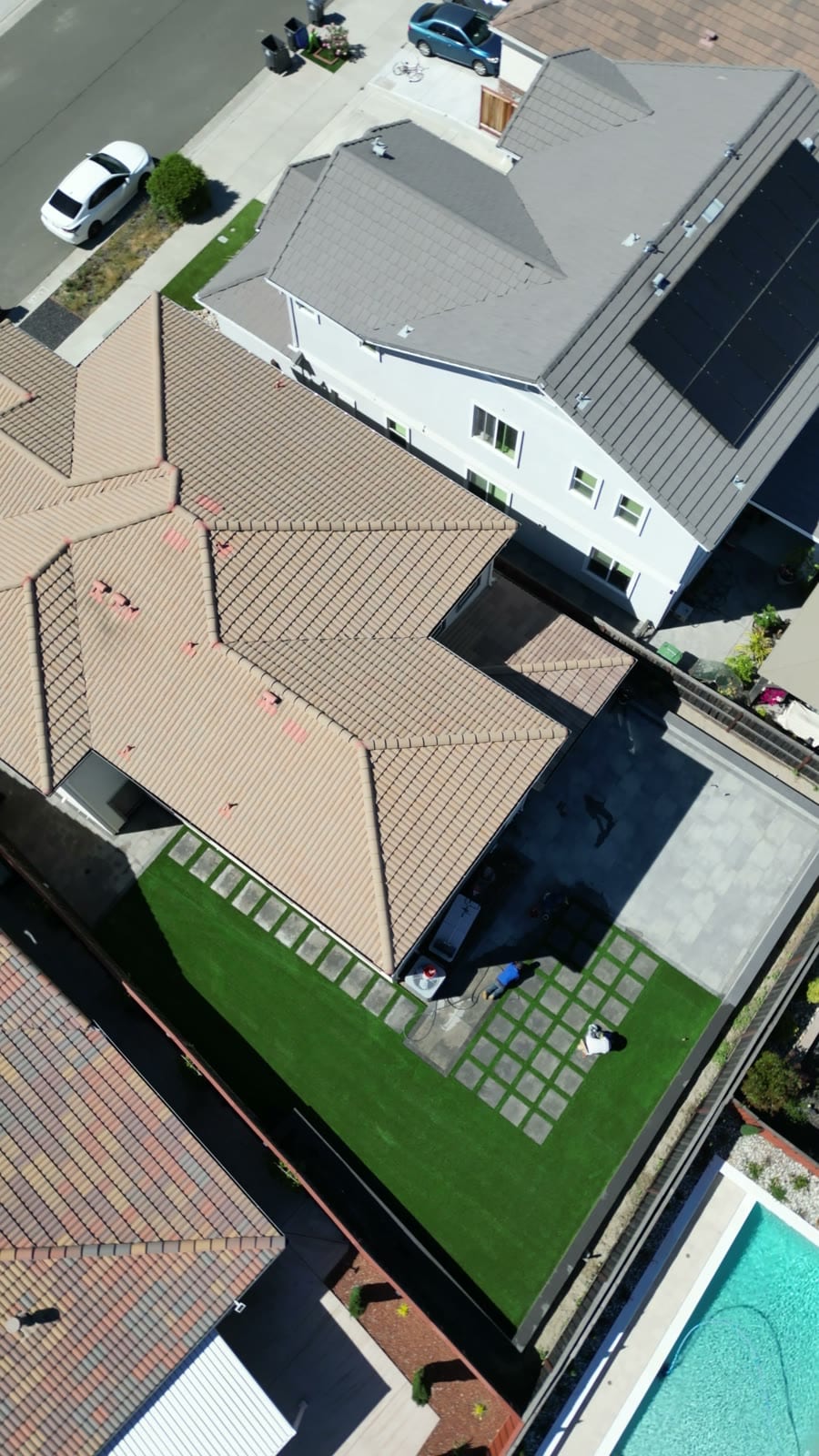
Backyard paver patio, Fairfield, CA. Ground-level flatwork like this usually needs no building permit. The grading and the drainage still have to follow the rules.
For the patio itself, usually no. The California Residential Code exempts flatwork, meaning patios, walks and driveways, as long as the surface is no more than 30 inches above the adjacent grade and is not built over a basement or a room. A paver patio laid at ground level in a Bay Area backyard is that kind of project.
That answer is accurate and almost useless, because the patio is rarely the only thing happening. The dirt you move to make it level, the wall that holds the slope behind it, the gas line for the fire pit, the apron where the driveway meets the street: those are where the permits are. And every Bay Area city draws those lines a little differently.
We get this question on almost every estimate visit, so here is the long answer.
What usually does not need a permit?
A ground-level paver patio, walkway or pool deck on your own lot, on reasonably flat ground, with no structure on top of it. Replacing an old concrete patio with pavers in the same footprint falls in the same bucket in most cities.
Low garden walls and landscape edging also tend to be exempt, as long as they stay well under the retaining wall threshold and are not holding back a slope or a driveway.
Notice the word "usually." Exempt from a building permit does not mean exempt from zoning. A patio can be legal to build and still break a setback rule, a front-yard paving limit or an HOA design rule. The building department will not stop you. The code enforcement letter comes later, or the buyer's inspector finds it when you sell.
What turns a patio project into a permit project?
These are the triggers we see most often in the Bay Area:
| Part of the project | Why it can need a permit |
|---|---|
| Grading and excavation | Most cities require a grading permit past a volume threshold, often around 50 cubic yards, or on steep ground |
| Retaining wall | Generally over 4 feet measured from the bottom of the footing, or any height if it holds back a slope, a driveway or a building |
| Pergola, patio cover or pavilion | A roofed or attached structure is a building, not flatwork |
| Gas fire pit or outdoor kitchen | A new gas line needs a plumbing permit and a pressure test |
| Lighting and outlets | Line-voltage electrical work needs an electrical permit |
| Driveway apron, curb cut, sidewalk | Work in the public right-of-way needs a city encroachment or right-of-way permit |
| Paving the front setback | Several cities cap how much of the front yard can be paved |
| Large new impervious area | Regional stormwater rules apply at 2,500 square feet and up |
| Work near a protected tree | Many cities require a permit or an arborist to cut roots of protected oaks and other trees |
On a typical backyard patio we build, none of these apply. On a hillside backyard in the Oakland hills, three or four of them can apply at once.
How do the rules differ between Bay Area cities?
Here is what we work with in the cities that come up most. The rules change, so treat this as the list of questions to ask, not the final answer, and check the city page linked for each.
Oakland. Oakland requires a grading permit when excavation or fill exceeds 50 cubic yards and the slope will exceed 20 percent, or when the cut or fill is deeper than five feet. The big one is timing: the city runs a wet weather grading moratorium from October 15 to April 15 every year, and no grading operations are allowed in that window. Retaining walls over 4 feet from the bottom of the footing need a permit, and walls that hold a surcharge need one at lower heights. Driveway aprons fall under the city's Curbs, Gutters and Sidewalks permit.
San Francisco. The rule that surprises people is Planning Code Section 132. If you pave or repave more than 200 square feet of the front setback, at least 20 percent of that setback has to stay unpaved and planted, and at least 50 percent has to be permeable. Permeable pavers count. Anything on the sidewalk side needs a Public Works permit. We wrote about this in detail for front walkways in San Francisco.
San Jose. San Jose limits paving of the front setback. On most single-family lots, no more than half of the front setback area can be paved, and widening a driveway needs a permit from the city. The details are on the city's driveways and sidewalks page.
Walnut Creek, Lafayette and the Lamorinda hills. Hillside cities set lower thresholds for walls and grading than flat cities do. Walnut Creek reviews some retaining walls from 3 feet. Lafayette treats grading over 50 cubic yards as a permit job, and leveling a sloped yard for a patio can hit that number faster than people expect.
Palo Alto, Santa Clara County and the Peninsula. Palo Alto and Valley Water pay rebates for permeable paving, with conditions on joint material and pre-approval before work starts. Many Peninsula and South Bay cities also protect oaks and other heritage trees, which matters if the patio goes under a canopy.
Marin. Marin cities look closely at grading on hillsides, drainage onto neighbors and anything near creeks. In very high fire hazard areas, the new Zone 0 rules also shape what can go within five feet of the house.
How much dirt is 50 cubic yards?
More than a flat patio and less than a sloped one. A 400 square foot patio on level ground, excavated 9 inches deep, moves about 11 cubic yards. The same patio cut into a slope, so the uphill side drops 2 feet to make it level, can move 30 or 40 cubic yards before you count the base rock coming back in.
That is why the same project can be exempt in Sunnyvale and need a grading permit in the hills above Lafayette. Flat lots almost never get near the threshold. Sloped lots get there quickly.
What is the 2,500 square foot stormwater rule?
The Bay Area's regional stormwater permit has a provision, known as C.3.i, for small projects. When a single-family project creates or replaces 2,500 square feet or more of impervious surface, the city requires at least one site design measure to manage runoff. Directing roof water to landscaping, using a rain barrel or installing permeable pavement are typical ways to meet it. San Mateo County explains it clearly.
Most patios are far below 2,500 square feet. A full backyard, plus a new driveway, plus a side yard, can get there. If you are close, permeable pavers often solve the requirement and the drainage at the same time.
Is winter a bad time to start a patio?
For flat backyards, no. Late fall and winter can be a good time to get on a hardscape schedule, and a small patio does not need a grading permit in most cities, so Oakland's moratorium does not touch it.
For slopes, timing matters. If your project needs a grading permit in Oakland, nothing moves between October 15 and April 15. Other hillside cities restrict or condition winter grading through erosion control requirements. If you have a sloped yard and want the work done by summer, the permit and engineering should start in winter so the grading can begin when the season opens.
What rain does to a patio built on a thin base is a separate problem, and we covered it in base prep and drainage before the rains.
What happens if you skip a permit you needed?
Three things, in the order we usually see them.
The neighbor calls the city. Grading and walls are visible, and hillside neighbors pay close attention to anything that sends water toward their lot. A stop-work order on a half-graded slope in November is the worst version of this.
The sale. California sellers have to disclose unpermitted work they know about, and buyers' inspectors look for retaining walls and structures without permits. It shows up as a credit, a renegotiation or a buyer who walks.
The failure. Most permit thresholds exist because things fail above them. A 5-foot wall built without drainage or engineering is the classic one. The permit is annoying. The wall falling into the neighbor's yard is worse.
Who should pull the permit?
The contractor, under their license, when the contractor is doing the work. Be wary of a contractor who asks you to pull an "owner-builder" permit. That shifts the legal responsibility for the work to you, and it is a common way for unlicensed crews to work around the rules. You can look up any California contractor's license in about a minute on the CSLB website.
How do we handle permits at Royal?
On the estimate visit we walk the lot with this checklist: slope, how much soil comes out, walls, the front setback, the right-of-way, gas, power, trees and drainage. If anything on the list needs a permit, it goes on the written quote as its own line, with who pulls it and roughly how long the city takes.
Most backyard patios we build need none of it. When a project does, we would rather tell you on day one than find out from an inspector on day four.
We have been building patios, driveways and retaining walls across the Bay Area for more than 15 years, on everything from flat Sunnyvale lots to the hills in Marin. If you want to know what your project needs, call 1-888-282-1344 or request a free design consultation. See the build itself on our paver patio page, and if a wall is part of the plan, start with our retaining wall cost guide.
Frequently asked questions
Do I need a permit to put in a paver patio in California?+
Usually not for the patio itself. The California Residential Code exempts ground-level flatwork, meaning patios, walks and driveways no more than 30 inches above the adjacent grade and not over a basement. A permit comes into play when the project also includes grading past your city's threshold, a retaining wall over the height limit, a cover or pergola, a gas line, electrical work, or work in the public right-of-way.
Can I build a patio in Oakland during the rainy season?+
Oakland has a wet weather grading moratorium from October 15 to April 15 every year, and the city says no grading operations are allowed during that window. Small patios that do not need a grading permit are often not affected, but hillside lots and jobs with significant cut or fill are. Call Oakland Planning and Building at (510) 238-3891 before you schedule winter work on a slope.
How much of my front yard can I pave in San Francisco?+
Under San Francisco Planning Code Section 132, when you pave or repave more than 200 square feet of the front setback, at least 20 percent of the setback has to stay unpaved and planted, and at least 50 percent has to be permeable. Permeable pavers count toward the permeable share. A 2026 amendment changed how permitted driveways are counted, so confirm the current text with SF Planning.
Do I need a permit to replace my driveway with pavers?+
The part on your lot usually does not need a building permit. The apron, the strip between the sidewalk and the street, sits in the public right-of-way, and almost every Bay Area city requires a right-of-way or encroachment permit to touch it. Widening a driveway or adding a curb cut almost always needs city approval.
Who pulls the permit, the homeowner or the contractor?+
On a contracted job it should be the contractor, under their license. Be careful with a contractor who asks you to pull an owner-builder permit for work they are doing. Owner-builder permits put the legal responsibility for the work on you.
Paver Patios
Outdoor living rooms built to host every season.

Written by the Royal Outdoor Solutions team
Family-owned Bay Area hardscape contractor with 15+ years of hands-on experience installing paver patios, driveways, walkways, pool decks and retaining walls. Licensed, bonded and insured.
1-888-282-1344
Tell us about your project.
Free, no-obligation estimate. We come measure on-site, walk you through the design options, and follow up in writing.