How Much Does a Paver Patio Cost in the Bay Area? (2026 Guide From an Installer)
Real installed price ranges for paver patios across the East Bay, Marin, the South Bay and the Tri-Valley, what moves the number up or down, and how to read a quote before you sign it.
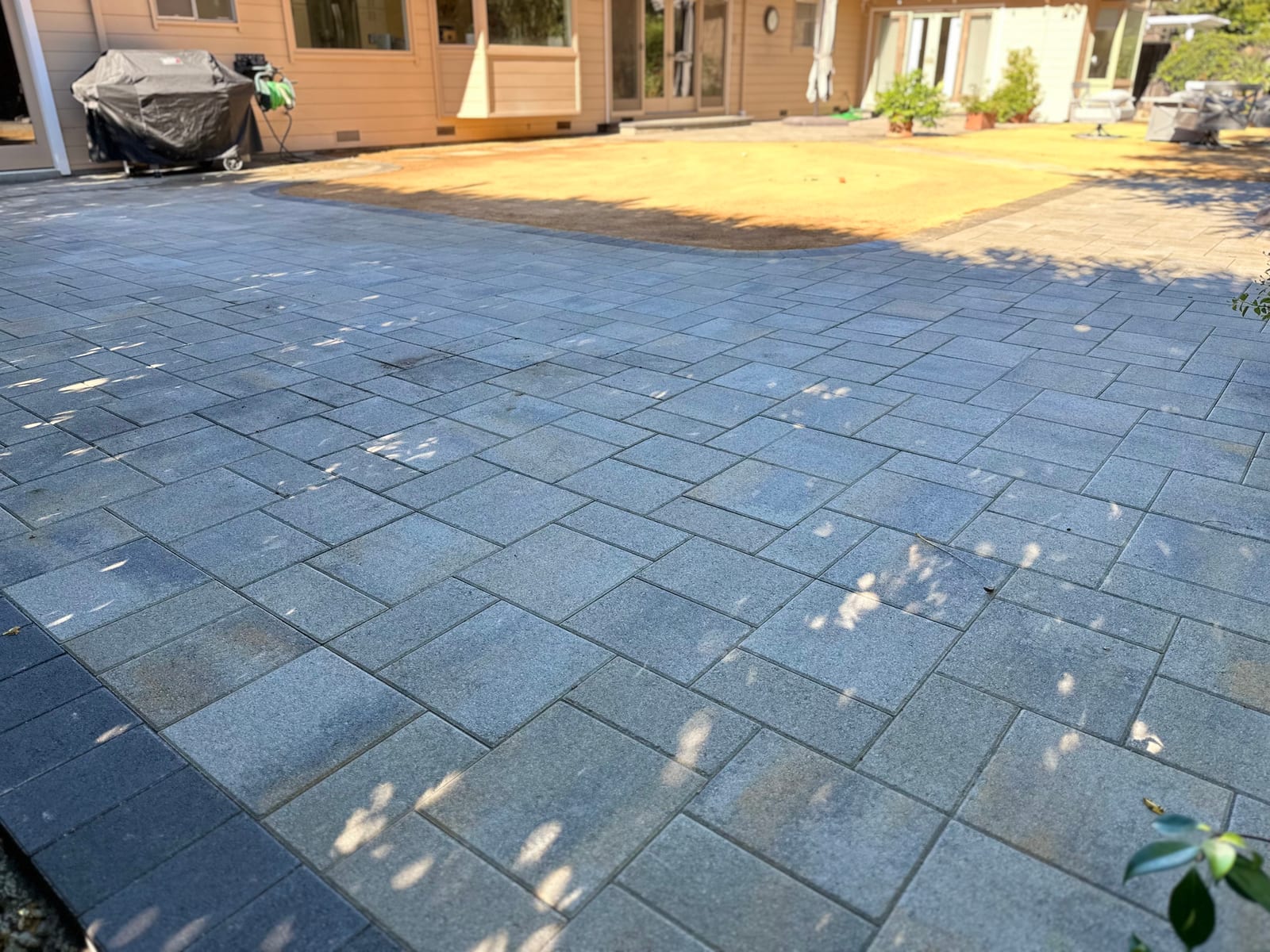
If you have started pricing a paver patio in the Bay Area, you have probably seen numbers that range from "surprisingly cheap" to "wait, for a patio?". Both can be real quotes. The difference is almost never the pavers themselves. It is what sits underneath them, how hard the site is to work on, and how much of the job the contractor is actually promising to do.
This guide gives you the installed price ranges we see across the East Bay, Marin, the South Bay, the Tri-Valley and Solano County, explains what moves the number, and shows you how to compare two quotes line by line so you are not comparing a full build against a shortcut.
Installed price ranges in the Bay Area (2026)
For a professionally installed paver patio, most Bay Area homeowners should budget $28 to $45 per square foot installed. That range includes demolition of the old surface, excavation, a compacted gravel base, edge restraint, drainage where it is needed, the pavers, joint sand and cleanup.
| Patio size | Typical footprint | Installed range |
|---|---|---|
| Small side patio or dining pad | 150 – 250 sq ft | $5,500 – $10,000 |
| Standard backyard patio | 300 – 450 sq ft | $9,500 – $19,000 |
| Large patio with seating areas | 500 – 800 sq ft | $15,000 – $34,000 |
| Full backyard (patio + walkways + turf) | 800+ sq ft | $30,000 – $70,000+ |
Those numbers assume a proper build. A quote that lands well below the bottom of the range is not automatically a bargain. It usually means a thinner base, no drainage plan, or a crew that is not licensed and insured. In our experience, the cheapest patio in the neighborhood is also the one that gets torn out and redone five years later.
What actually drives the price
1. The base, not the pavers
Around 60 percent of the labor on a paver patio happens before a single paver is set. We excavate 8 to 10 inches, install and compact a crushed rock base in lifts, add a bedding layer, and set the edge restraint. Skipping or thinning any of those steps is how a patio ends up wavy after the first wet winter. This is the part of the quote to ask about first.
2. Bay Area soil and drainage
Much of the East Bay and the Tri-Valley sits on expansive clay that swells when it is wet and shrinks when it dries. Marin and the Peninsula add slopes. A patio that does not manage water will move. Depending on the lot, the quote may include a French drain, a channel drain at the house, or simply a correct slope away from the foundation. Drainage adds cost up front and saves a lot more later.
3. Access
A backyard you can reach with a skid steer costs less to build than one where every wheelbarrow of base rock goes through a side gate. Hillside lots in San Anselmo, Orinda or Los Gatos, or tight urban lots in Alameda and Berkeley, take more labor hours for the same square footage.
4. Paver selection
Standard concrete pavers rated to 8,000 PSI are the workhorse of most patios. Larger-format slabs, permeable pavers, natural stone and porcelain cost more in material and in labor, because they take longer to set. Borders, inlays and mixed patterns add labor too. They also add a lot of curb appeal, so it is a trade-off worth discussing rather than dismissing.
5. Demolition and haul-away
Removing an old concrete slab, a rotten deck or a failed patio is real work. Concrete is heavy and goes to a recycling facility by the ton. If your quote does not mention demolition, ask where that cost is hiding.
6. What else is in the yard
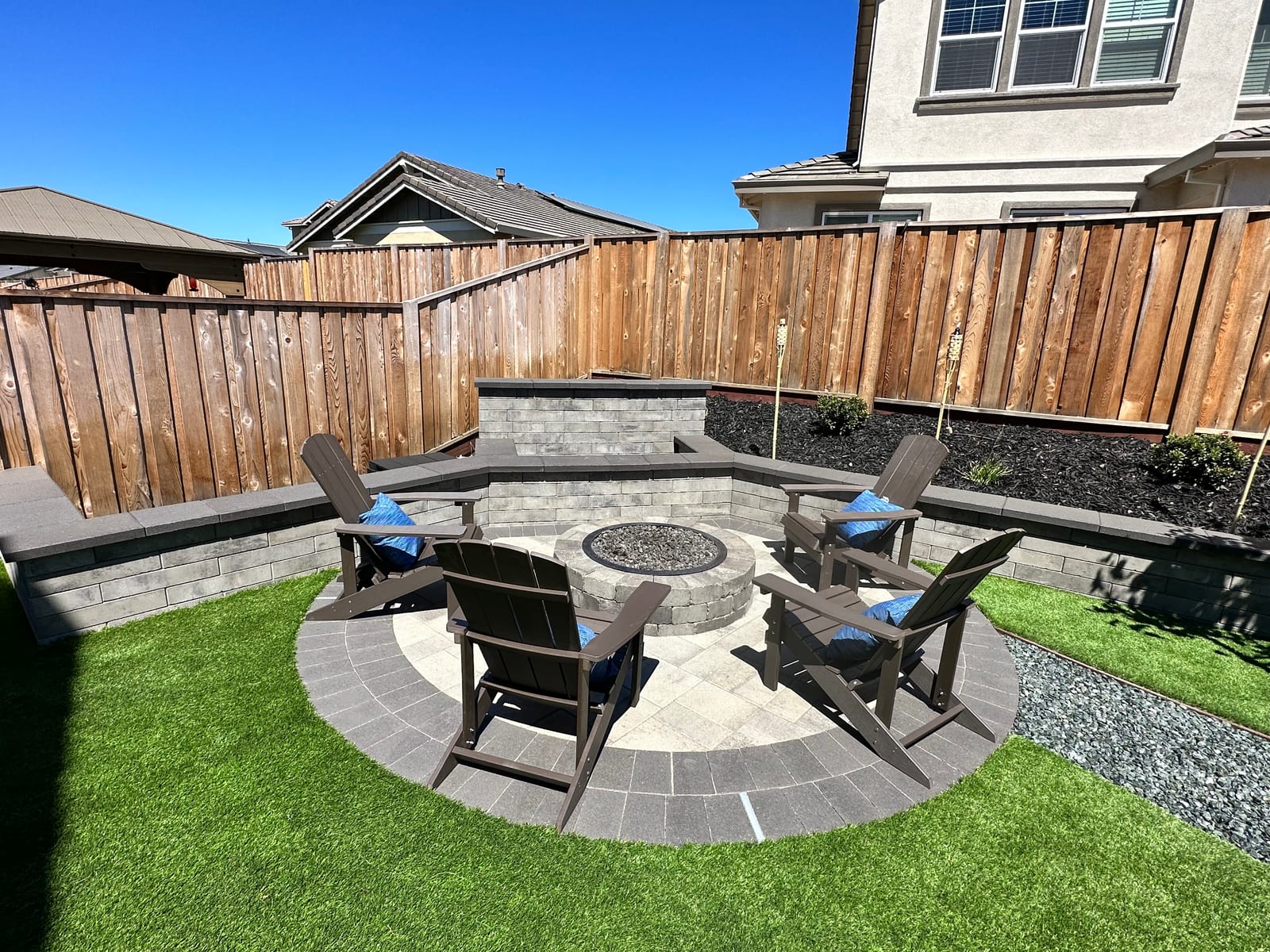
Seat walls, fire pits, steps, outdoor kitchens, lighting and artificial turf are usually priced as separate line items. Bundling them into one project generally costs less than doing them one at a time, because the crew, the equipment and the excavation are already on site.
Price by region: what we see across the Bay
The material cost is similar everywhere. The labor conditions are not.
- East Bay (Pinole, Hercules, Richmond, El Cerrito, Alameda, Oakland): mostly flat lots, clay soil. Budget for drainage. Usually mid-range.
- Contra Costa (Concord, Walnut Creek, Orinda, Lafayette): mix of flat and sloped lots. Orinda and Lafayette hillsides often need retaining walls alongside the patio.
- Marin (San Anselmo, San Rafael, Mill Valley): slopes, tight access, tree roots. Expect the upper half of the range.
- South Bay (Sunnyvale, Los Gatos, San Jose): flatter, good access, popular for patio plus turf combinations.
- Tri-Valley (Livermore, Pleasanton, Dublin): hot summers and heavy winter rain. Base and drainage matter more than anywhere.
- Solano (Fairfield, Vacaville): larger lots, pool decks are common, good equipment access.
How to read a paver patio quote
When you have two or three quotes in hand, compare them line by line, not by the total:
- Base depth and compaction. It should be written down. "Prep" with no numbers is a red flag.
- Drainage. Is there a plan, or just a hope?
- Edge restraint and joint sand. Polymeric sand and a proper restraint keep the pattern tight for years.
- Paver spec. Brand, PSI rating, thickness.
- Demolition and disposal. Included or extra?
- Warranty. Ours comes with the manufacturer's warranty on the pavers and our workmanship guaranteed in writing.
- License, bond and insurance. Ask for the numbers. It takes 30 seconds to verify with the state.
If one quote is far cheaper and cannot answer those seven points, you are not comparing the same project.
Pavers vs. poured concrete: the long-term math
A poured concrete patio costs less on day one. In the Bay Area it also cracks, usually within a few years, as the clay moves and the ground shifts. Repairs mean cutting and patching, and the patch never matches. Pavers flex with the ground, and if one is ever stained or damaged you lift it and replace that one piece. Over 15 or 20 years the paver patio is typically the cheaper surface, and it is the one that still looks new. We go deeper into that comparison in our guide to paver driveways versus concrete in the Bay Area.
When is the best time to build?
Fall is the best window in the Bay Area. The ground is dry, the weather is mild, crews are available, and the patio is finished before the winter rains and long before next summer. Spring fills up fast, and summer heat in the Tri-Valley and Solano makes setting pavers slower work.
Get an itemized estimate, on site, for free
Every Royal Outdoor Solutions patio starts with a free on-site design consultation. We measure the space, look at drainage and access, talk through paver options, and send a written, itemized estimate so you see the full breakdown before any commitment. See our paver patio service, browse finished projects, or request your free estimate. We serve the entire San Francisco Bay Area.
Written by the Royal Outdoor Solutions team
Family-owned Bay Area hardscape contractor with 15+ years of hands-on experience installing paver patios, driveways, walkways, pool decks and retaining walls. Licensed, bonded and insured.
1-888-282-1344More guides
All guides →
Tell us about your project.
Free, no-obligation estimate. We come measure on-site, walk you through the design options, and follow up in writing.