Fire Pit Patio Cost in the East Bay (2026): Gas vs. Wood, Seat Walls and What to Budget
What a built-in fire pit with a paver patio and seat wall really costs in Concord, Walnut Creek and the rest of Contra Costa, the gas vs. wood decision, and the details that separate a fire feature you use every week from one you regret.
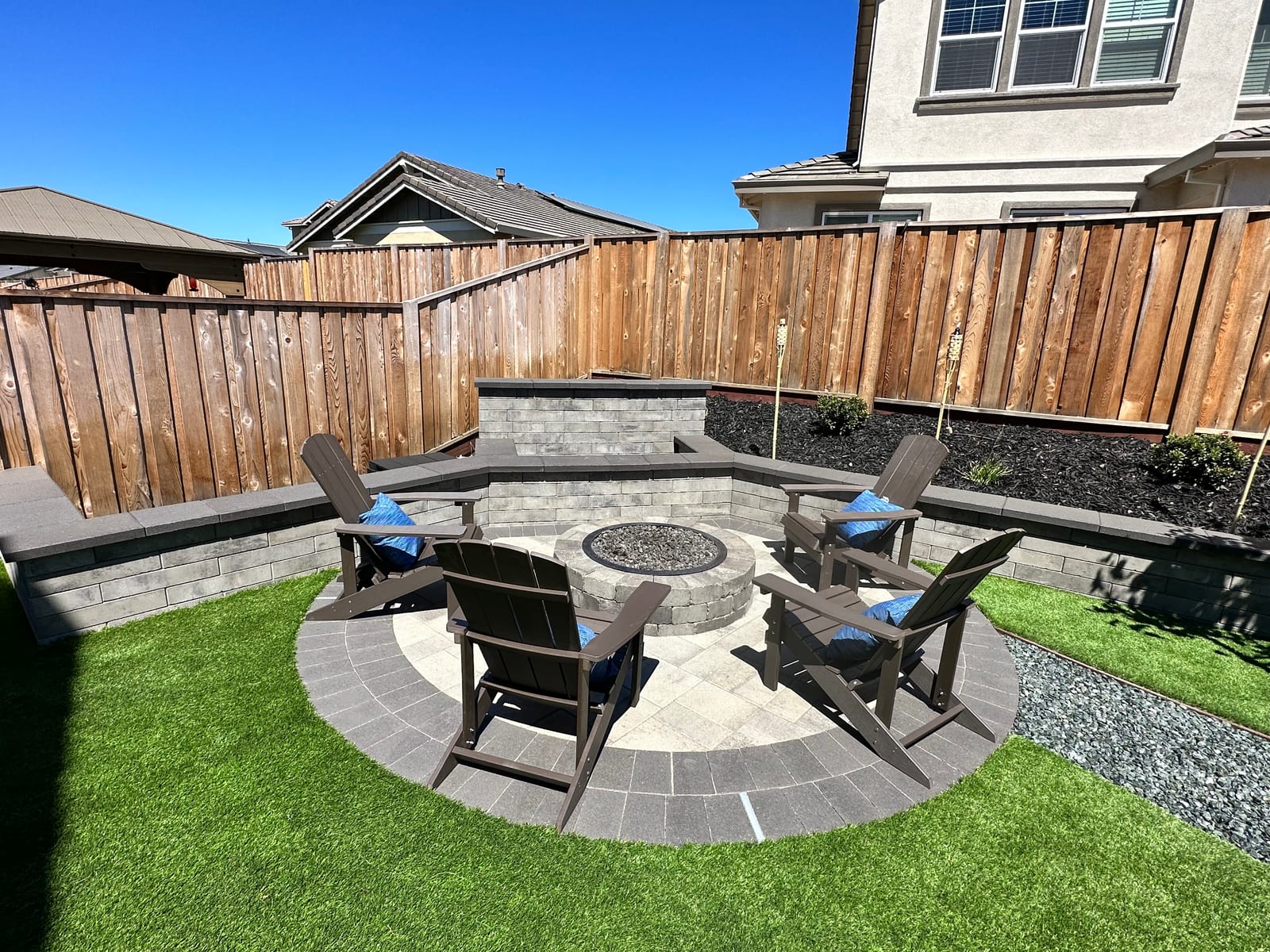
A fire pit is the single most requested feature on the patios we build in the East Bay. It is also the feature that most often disappoints, because a fire pit is only worth having if the space around it is designed for people to actually sit and stay. A ring of blocks on a lawn gets used twice. A built-in pit with a level paver patio and a seat wall gets used every Friday night from March to November.
This guide covers what a fire pit patio costs in Concord, Walnut Creek, Pleasant Hill, Martinez and the rest of central Contra Costa in 2026, how to decide between gas and wood, and the details that make the difference.
What the whole project usually costs
Almost nobody builds a fire pit by itself. It goes in with a new patio, or as an extension of an existing one, and very often with a seat wall so nobody is hauling chairs across the yard. These are the installed ranges we see.
| Scope | Typical installed range (2026) |
|---|---|
| Built-in wood-burning fire pit only, on an existing patio | $3,500 – $5,500 |
| Built-in gas fire pit only, on an existing patio (with gas line) | $5,000 – $9,000 |
| Fire pit + new 250–350 sq ft paver patio | $12,000 – $20,000 |
| Fire pit + patio + curved seat wall | $18,000 – $30,000 |
| Full backyard: fire pit area, dining patio, walkways, lighting | $30,000 – $60,000+ |
The paver patio itself runs $28 to $45 per square foot installed in the Bay Area, and that part of the budget follows the same rules as any patio: the base and the drainage are most of the labor, and the cheapest quote is usually the one that skipped them.
Gas vs. wood: the honest comparison
Wood-burning is the cheaper build. It is a block or stone ring with a steel insert, no plumbing, no permit in most cases. It smells like a campfire, which is the point for some families. The downsides are real: smoke that follows people around the seating, embers, ash to clean out, and the Bay Area Air District's Spare the Air rules, which ban wood burning on the exact cold, still nights when you most want a fire.
Gas costs more up front because it needs a plumbed natural gas or propane line, a burner and a control valve, and a permit. In exchange it lights with a key or a switch, burns clean, is allowed every night of the year, and the patio does not smell like smoke in the morning. It is also safer with kids around, because there are no embers and it turns off instantly.
In our experience, homeowners who choose wood use the fire pit a handful of times a year. Homeowners who choose gas use it constantly. If the budget allows, gas is the better value even though it is the more expensive line on the quote.
Size and layout
A fire pit that is too small looks like an afterthought. One that is too big turns the patio into a hallway around it. For a typical backyard we build the pit itself at 36 to 48 inches across and give it a circular or semicircular patio zone of at least 12 to 16 feet in diameter, so chairs sit at a comfortable distance and people can walk behind them.
Keep the fire feature at least 10 feet from the house, fences, pergola posts and low tree branches, and check the manufacturer's clearance if you use a steel insert. If the pit sits under a pergola or near a covered patio, it has to be gas and the overhead clearance has to be checked. We lay all of this out on site before anything is priced.
The seat wall
A seat wall is the upgrade that changes how the space gets used. It is a segmental block wall 18 to 20 inches tall with a smooth cap, curved around part of the fire pit. It gives permanent seating for six or eight people without any furniture, it frames the patio visually, and it keeps kids from wandering behind the fire. Installed cost is typically $250 to $400 per linear foot, and a 20 to 30 foot curve is common.
Because the seat wall, the pit and the patio share the same base, building them together is far cheaper than adding the wall later.
What is under the fire pit matters
A built-in fire pit is heavy and it gets hot. We build it on the same compacted base as the patio, with a fire-rated insert or fire brick liner protecting the block, a gravel or lava rock bed for drainage, and for gas, a dedicated trench for the line with a shutoff valve where you can reach it. A pit set directly on pavers with no liner will crack the block and spall the pavers around it within a couple of seasons.
Permits and rules in Contra Costa
- Wood-burning pits generally do not need a building permit for a residential backyard, but you must follow local open-burning rules and Spare the Air alerts.
- Gas fire pits need a permit for the gas line, and the gas work must be done by a licensed contractor. We coordinate that as part of the project.
- Some cities and HOAs have their own rules on clearances and on wood burning. We check before the design is final.
What moves the price up or down
- Access. A backyard the crew can reach with equipment costs less than one where base rock goes in by wheelbarrow through a side gate.
- Gas line distance. A pit 15 feet from the meter is a short trench. One at the back of a deep Concord lot is a long one.
- Materials. Standard block with a cap is the workhorse. Natural stone veneer, porcelain caps and large-format pavers add material and labor.
- Lighting and extras. Low-voltage lighting in the seat wall and along the patio edge is a small line item that makes the space usable after dark.
How to read a fire pit quote
Ask for the patio, the pit, the seat wall and the gas work as separate line items. Ask what the base depth is, where the water goes, whether the pit has a fire-rated liner, and who is pulling the gas permit. A quote that is one number with no breakdown is hard to compare and easy to cut corners on.
A patio you actually use
The best fire pit patios we build in the East Bay are the simple ones: a level paver circle, a gas pit at a comfortable height, a curved seat wall, a couple of lights. That combination gets used more than any other feature in the yard, and it holds its value because it is built on a proper base with 8,000 PSI pavers that will not crack with the Contra Costa clay.
Royal Outdoor Solutions designs and builds fire pits, paver patios, seat walls and walkways across Concord, Walnut Creek, Pleasant Hill, Martinez, the East Bay, Marin, the South Bay and the Tri-Valley. Family-owned, 15+ years of experience, licensed, bonded and insured, manufacturer's warranty in writing. See the fire pit service, look at finished fire pit patios, or book a free on-site design consultation.

Written by the Royal Outdoor Solutions team
Family-owned Bay Area hardscape contractor with 15+ years of hands-on experience installing paver patios, driveways, walkways, pool decks and retaining walls. Licensed, bonded and insured.
1-888-282-1344More guides
All guides →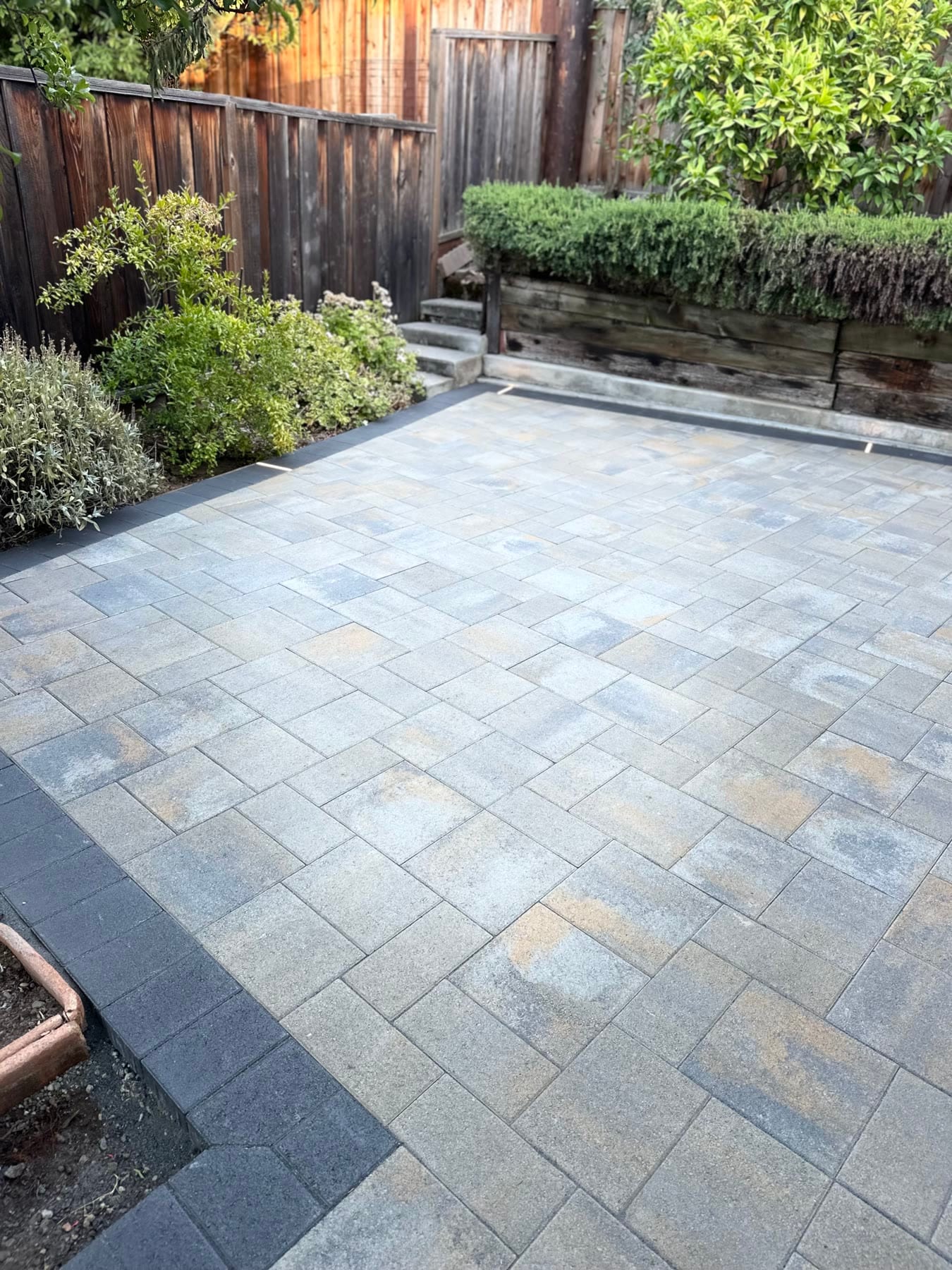
Tell us about your project.
Free, no-obligation estimate. We come measure on-site, walk you through the design options, and follow up in writing.